top of page
.png)


Can You Really “Ride Lighter”? Weight distribution in the saddle.
The idea that a rider can “ride lighter” is common in equestrian instruction. Riders are encouraged to take weight off the horse’s back, lighten the seat, avoid putting too much weight into the stirrups, or aim for fixed ratios such as 60/40, 80/20 or 50/50 between seat and feet. These ratios can be useful coaching cues. They may help a rider become more aware of how they organise their body in the saddle. But they are not prescriptive. They can't be. Why weight distribution


Where Should the Stirrup Should Sit? Ball of Foot explained
Riders are often told to “put the ball of the foot on the stirrup,” yet there is widespread confusion about what that actually means and why it matters. This distinction is not trivial. Where the stirrup sits on the foot directly affects stability, movement, and how effectively a rider can absorb the horse’s motion. What does “ball of the foot” actually mean? In anatomy, biomechanics, physiotherapy, podiatry, and sports science, the term ball of the foot refers to the metata


Knee Blocks and Rider Biomechanics
In last week’s blog post, I discussed why individual physical ability and rider biomechanics must be taken into account when we assess rider position. Riders do not all arrive in the saddle with the same joint range, strength, coordination, or capacity for movement – and equipment cannot override those differences. One of the responses to that post was a familiar one: that the rider simply needed better knee blocks to hold her leg in the “correct” position, and that from th


Stirrup Length Isn’t About Discipline or Looking Right – It’s About Individual Rider Biomechanics
How Stirrup Length Can Hinder – or Help – Your Riding Rider biomechanics from a rider physio perspective This week’s social media post about a rider with severely arthritic hips and restricted movement sparked far more debate than I expected. During that rider physio session, we shortened her stirrups to support her biomechanics in the saddle. Not to make her “ride short”, not because of discipline rules, and not for the sake of appearance – but to support her body in the sa


Riding Ready by Pegasus Physio
Understanding what your body needs to do – and being able to do it A lot of riding is talked about in terms of outcomes. We talk about what it should look like, or what we want riders to do – a still upper body, quiet hands, a deep seat, a stable lower leg, a rider who looks “balanced”. We talk about what the horse should do – more forward, more through, straighter, more consistent in the contact. And none of that is wrong. Outcomes matter. But outcomes are the result of som


Why a Circle Is Really a Thousand Squares - and What That Means for Rider Alignment
This week online I have been focusing heavily on the rider’s position when riding a circle, particularly the instruction I frequently use: rotate your pelvis in the direction of travel. This single phrase creates more discussion, debate and resistance on social media than almost anything else I talk about (except maybe heels down!) because it challenges conventional thinking about rider alignment. Many riders misunderstand it to mean overly twist into the circle, drop the ins

Rider Pelvic Movement When Riding a Circle
Should the Rider’s Pelvis Turn Inward or Outward When Riding a Circle “Turn your belly button to the direction you want to go.” It’s one of the most common phrases instructors use to help rider when they are riding a circle. The idea behind it is simple: stop riders from yanking on the inside rein and instead get them to steer with their body instead. But what riders feel they’re doing, and what’s actually happening in their pelvis and spine, are often very different things.


Rider Biomechanics - Why the Details Matter More Than the Bigger Picture
When I posted the first photo of this rider on social media – where we were working on neutral vs anterior tilt – it created far more discussion than I ever expected. Left anterior tilt. Right neutral pelvis. Some people preferred the image on the left, saying her alignment looked stronger, that she was “more correct,” and that the forward-tilted pelvis – the so-called “three-point seat” – was better. Others commented on the saddle fit. A few said she was in a chair seat. And


Rider Biomechanics and Saddle Fit: Seat Bones, Pelvis Shape, and Rider Posture Explained
Following on from my last blog about why the seat bones are for sitting , I had lots of comments about pelvic position when sitting...


Seat Bones vs. Pubic Arch in Riding
Over the past few weeks, my posts about pelvic position in the saddle have generated some of the liveliest discussions I’ve seen on my...


How to Hold the Reins for Soft Hands
"Soft hands." "Elbow to bit." "Quiet hands." These phrases are everywhere in riding instruction. And for riders who know what they mean...


Soft Hands when Riding Start with Your Wrist (and thumb): Improve Feel and Rein Control
Thumb Position in Horse Riding: Not Quite a 5000-Word Essay, But Close Enough Someone recently commented on a social media post that I...


Stirrup Length in Riding: Why It’s Not One-Size-Fits-All
People always have something to say about stirrup length. Any time I post a video, there’s always a comment about how someone’s stirrups...
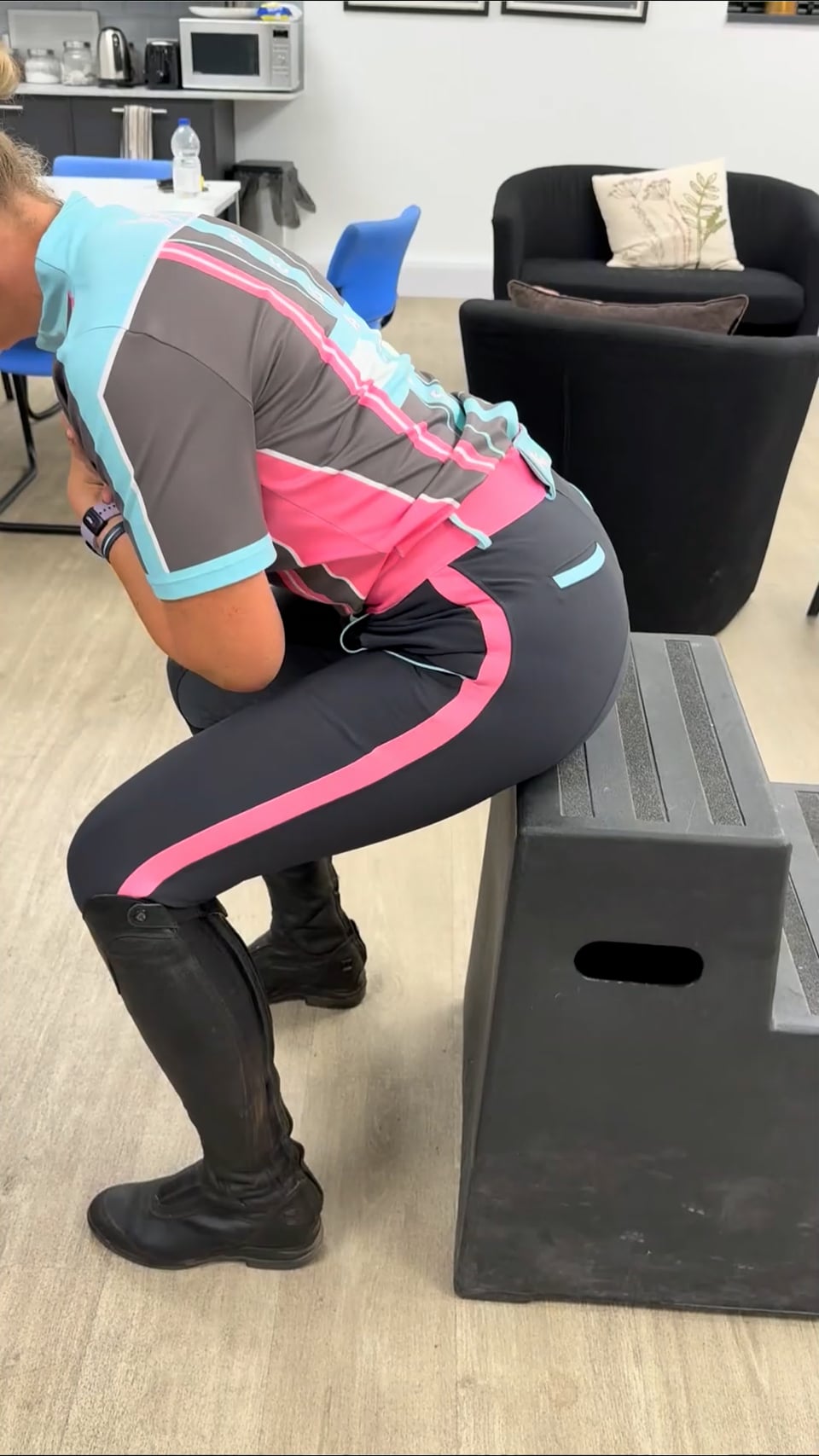
Why rider biomechanics when jumping is important for your horses movement
In jumping, your timing and position have far more influence on your horse’s effort than many riders realise - yet it's rarely examined...
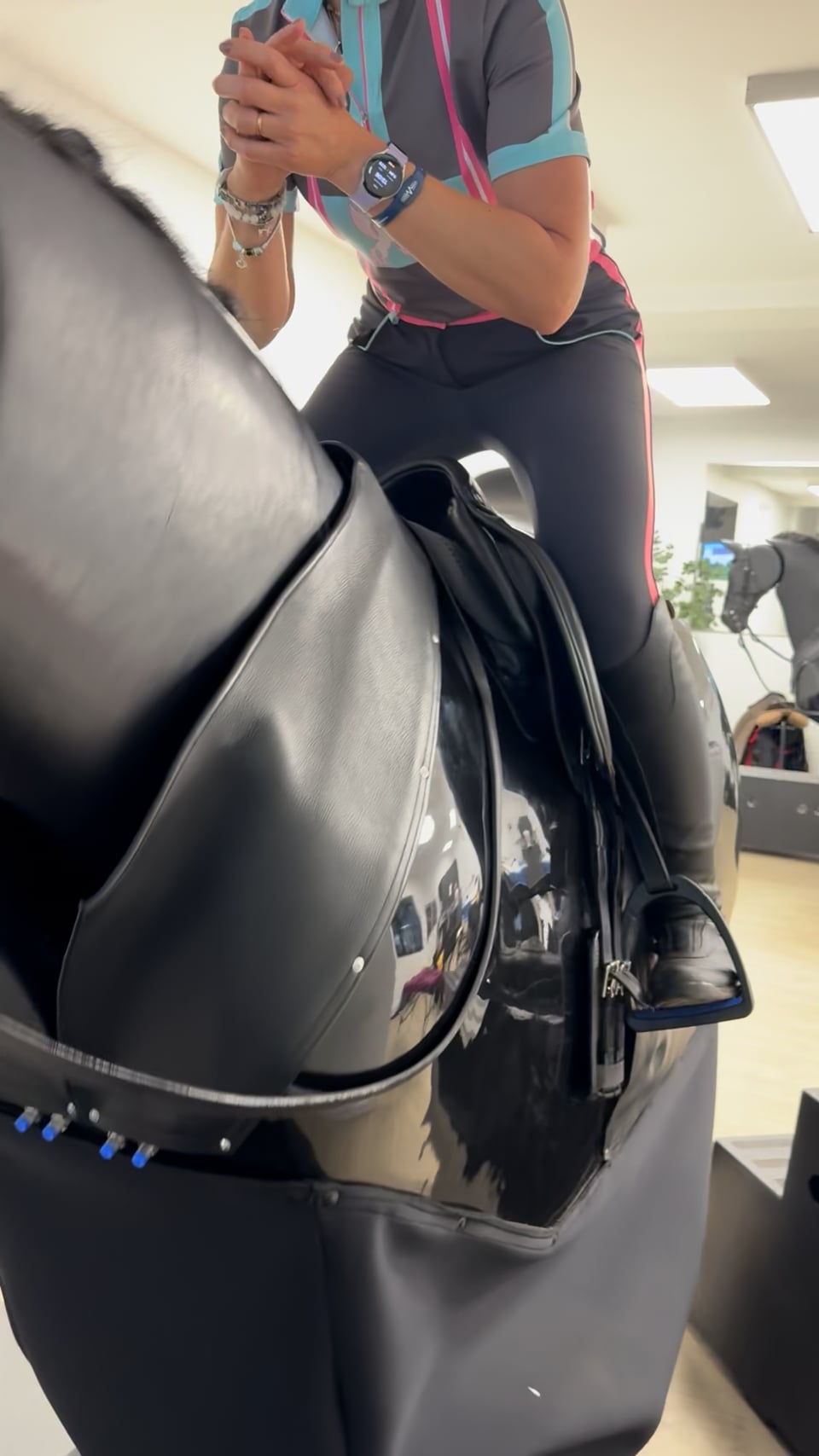
You’re an Athlete Too: Why Off-Horse Rider Training Matters
Why Simulators and Off-Horse Rider Training Matter: Riding Is a Sport People sometimes get frustrated with riding simulators or...


How Rider Biomechanics Affect Rein Tension & Horse Welfare
❤️ I love helping riders learn and understand how what they do with their hands and upper body affects the horse- it's why behind rider...


Getting Better at Riding Doesn’t Always Mean Just Riding More - How Rider Training Helps Instead
It's a common belief in the equestrian world: the more you ride, the better you get. While consistency and saddle time are essential,...


Understanding Your Rider Biomechanics
🎯 What Your Coach Means and Why You Can’t Feel It...Yet “Ooooh, That’s What My Instructor Meant!” This is something I hear...


Do female riders really pick fashion over function?!
Recently, I shared a post on social media about the design of modern riding boots after a male commenter suggested that women choose...


Why a Neutral Spine Matters for Your Riding and Your Spine Health
There’s a lot of advice on rider biomechanics floating around online. Most of the time, even if I don’t fully agree with it, I let it go...


Understanding the Canter: Rider and Horse Biomechanics Working Together
Lots of riders struggle to sit to the canter . They’re often told to scoop , circle , or drive - but to ride it well, we need to...


But I Don't Ride Like That!
Have you ever been told to move your body a certain way in the saddle, only to think, “But I don’t ride like that!” ? You're not alone....


Why Struggling in the Saddle Often Means You’re Improving- How Rider Development Really Happens
The Only Time Failure Comes Before Success is in the Dictionary! It’s a great saying, even if it’s not technically true! But I was...


Gripping is often not just a bad habit!
One of the most common riding struggles is gripping with the legs. Riders are often told to "stop gripping," "relax the legs," or "open...
Click to follow on social media


bottom of page